The Spex

A space where thought takes form — and form takes voice.

These are not articles. They are acts of attention — written and spoken — where the cultural foundations of Bespography meet the questions that matter. Each piece is a lens. Each lens changes what you see.
What Remains

There is a novel by Dostoevsky... not the most famous one, not the one people cite at dinner... called The Insulted and the Injured.

In it, there is a child. A girl named Nelly. She is thirteen years old. She has lost everything — her mother, her home, her health, any reason to trust another human being.

And yet, when the moment comes — the moment when an old man's pride is about to destroy his own daughter, the way Nelly's grandfather once destroyed hers — this child stands up... and speaks.

She tells her story. Not to persuade. Not to argue. Simply because the truth of what she has lived does not allow her to remain silent.

And the old man's heart breaks open.

Not because Nelly was eloquent. Not because her words were clever. But because what came through her was something that no circumstance had managed to destroy.

Her character.

We spend most of our lives communicating. Explaining who we are. Presenting ourselves. Adjusting the story depending on who is listening.

And none of it lasts.

The words we choose for an occasion dissolve with the occasion. The image we compose for a room vanishes when we leave it. The version of ourselves we offer to the world is, by nature, temporary. It is meant to serve the moment — and with the moment... it fades.

But there is something else. Something underneath.

The impression that a person leaves — not through what they say, but through the quality of their presence. The way a voice fills a room without raising its volume. The way someone listens, and you feel heard in a place you didn't know was exposed. The way a hand moves... and you understand something about that person that they have never told you.

That is what remains. It is not personality. It is not style. It is character — in the oldest, deepest sense of the word. The mark that a soul leaves on reality... simply by being present.

Dostoevsky understood this. His greatest characters are not defined by what they do. They are defined by what they are when they can no longer do anything. Stripped of status, of power, of the stories they have told themselves — what is left?

The answer, in every case, is the same.

What is left... is what was always there.

Not everyone feels this. Not everyone needs to.

But there are people — rare, quiet, often unaware of their own depth — who carry a kind of gentleness that is not weakness. It is the gentleness of those who have looked at the world without turning away. Who have chosen, despite everything, not to harden.

They do not need to be told who they are. They need to be recognised.

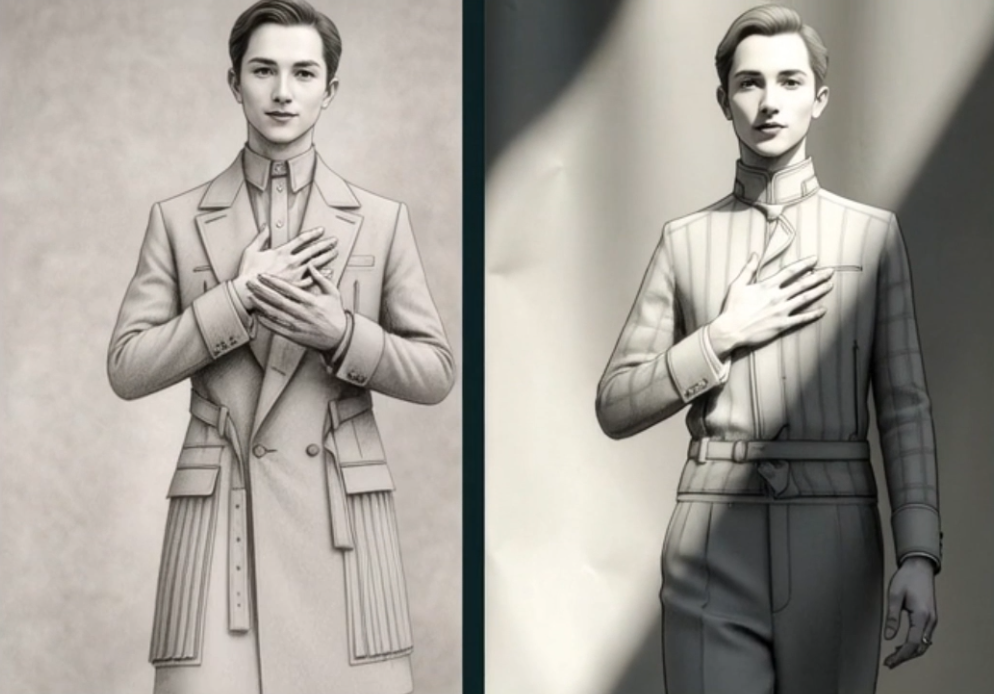
And what they wear — what truly belongs to them — should carry the same permanence as the character it serves.

Not the fleeting language of fashion. Not the performance of the moment.

Something that remains.